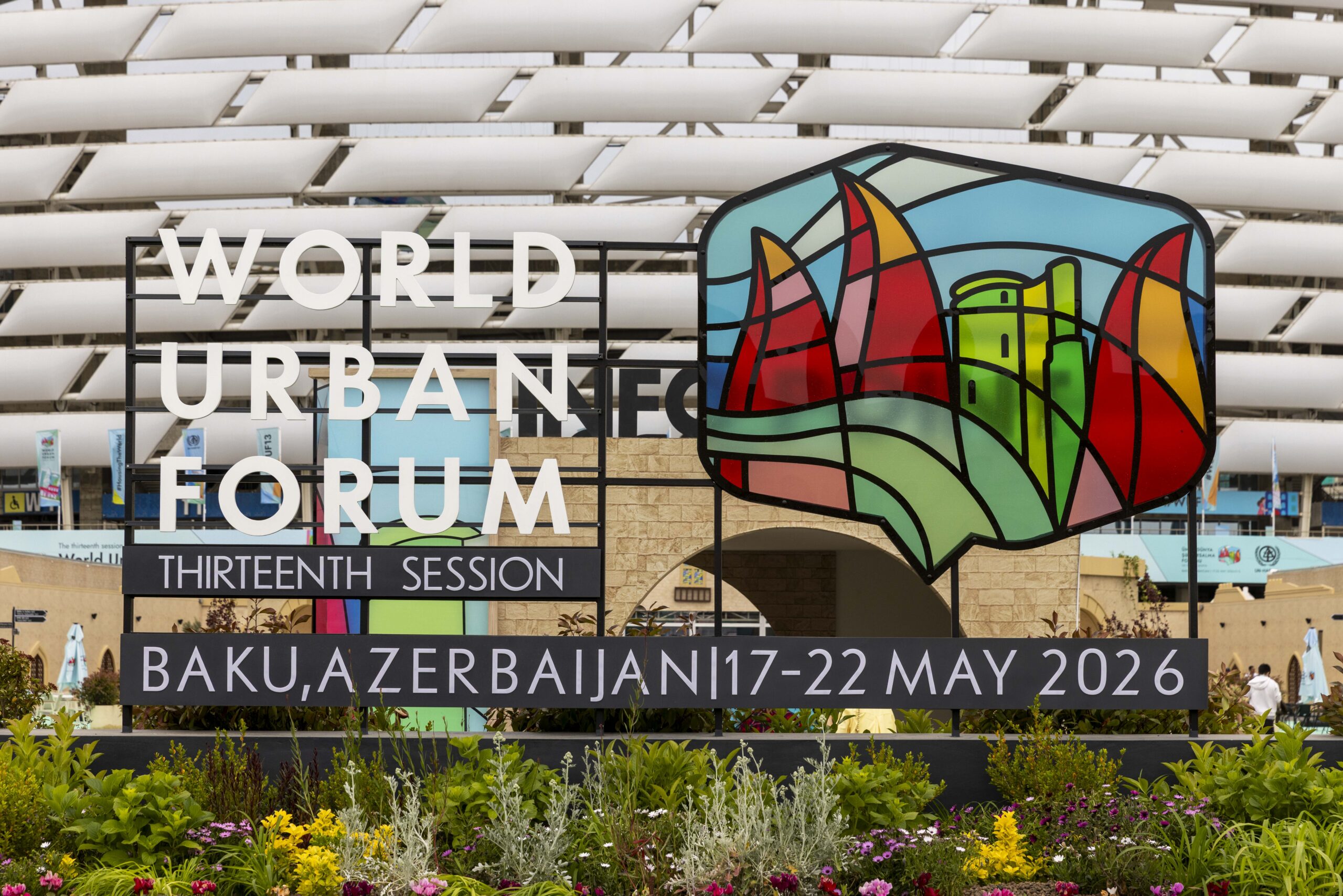
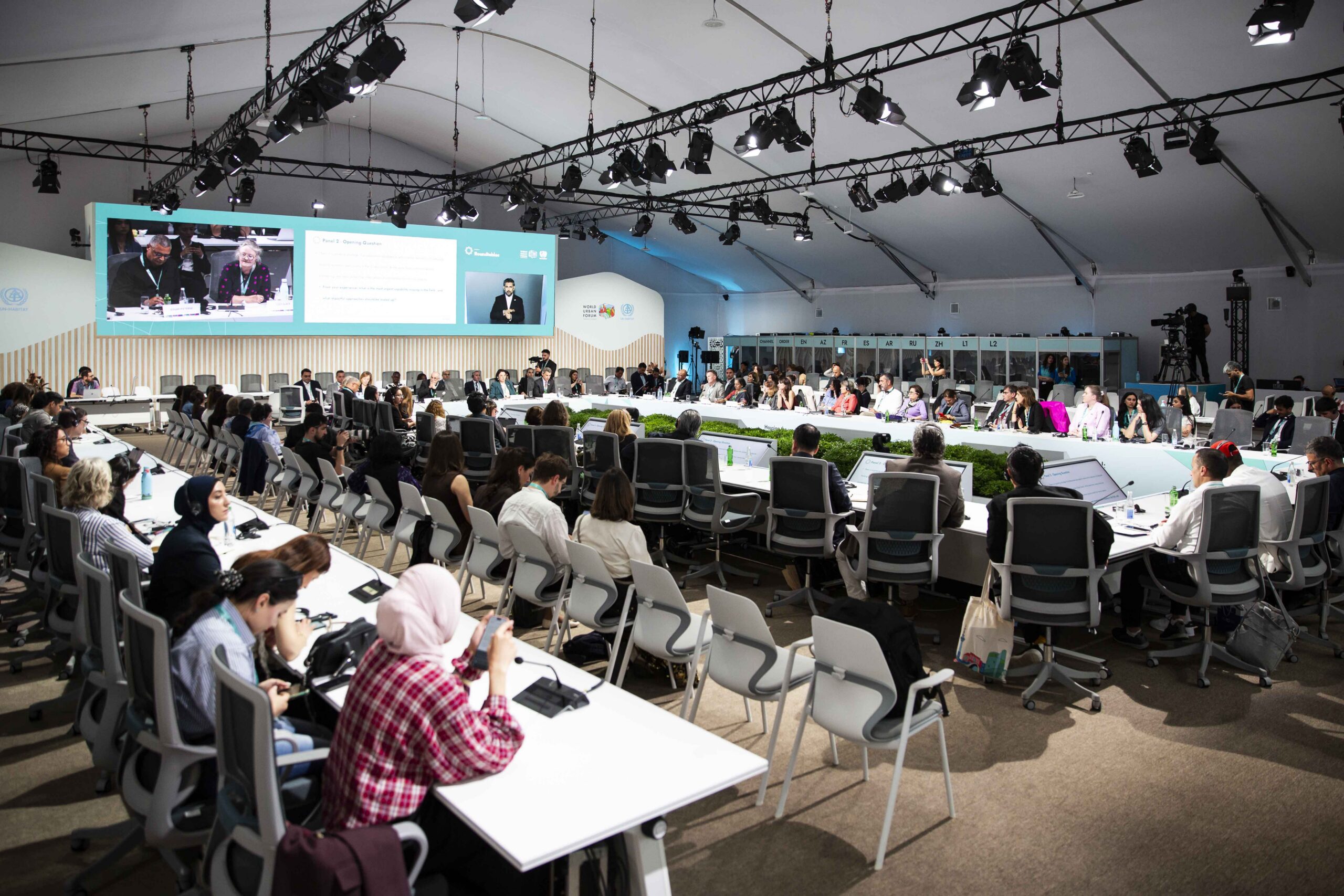
Convened by UN-Habitat and hosted by the Government of Azerbaijan, the 13th Session of the World Urban Forum (WUF13) took place in Baku from 17-22 May. The Forum brought together governments, local authorities, UN agencies, civil society organizations, academia, youth representatives, urban practitioners, and private-sector actors to exchange perspectives on responses to urban transformation and the global housing crisis. Held at the midpoint of implementation of the New Urban Agenda (NUA), WUF13 also aimed to contribute to the 2026 report of the UN Secretary-General on sustainable urbanization.
Momentum and political context
The Forum took place amid converging global pressures: accelerating climate impacts, widening urban inequality, rising living costs, and increasing displacement linked to both environmental and socio-economic stressors. At the same time, progress toward the Sustainable Development Goals remains uneven, while fiscal constraints and declining public investment have intensified debates on financing urban transformation.
In this context, WUF13 reflected a broader recalibration in global urban governance toward implementation-oriented agendas, where emphasis is increasingly placed on delivery, financing, and scalability rather than normative agenda-setting alone.
Central thematic areas
The Forum’s thematic architecture clustered around several key areas.
Housing affordability and homelessness emerged as dominant concerns, with attention to equitable housing systems, informal settlement upgrading, and inclusive urban planning. Climate resilience was another major pillar, particularly in relation to infrastructure vulnerability, disaster risk reduction, and climate-sensitive urban design.
Informal settlements and slum upgrading featured prominently, reflecting persistent structural inequalities in urban access and service provision. Additional themes included post-crisis reconstruction, gender-responsive urban development, smart cities, digitalization, land governance, and local institutional strengthening.
A notable trend was the increasing integration of social justice and human rights language into urban policy discussions, suggesting a gradual normative shift beyond purely technocratic urban planning approaches.
Issues receiving comparatively limited attention
Despite the breadth of the agenda, several structural issues received relatively limited sustained engagement.
Examination of the forum’s summary reports showed that questions related to shrinking civic space, political repression, and deeper structural drivers of inequality remained marginal in mainstream discussions. While climate resilience was a dominant narrative, it was largely framed through adaptation, infrastructure resilience, and nature-based solutions.
In contrast, the structural role of fossil fuel dependence in driving climate change received limited attention. This reflects a broader tendency within urban climate governance to prioritize adaptation and resilience over mitigation-oriented debates that address energy systems and political economy dimensions of the climate crisis.
Similarly, displacement was widely discussed, but predominantly through developmental and resilience-oriented lenses. It was largely framed in relation to housing stress, climate vulnerability, and rapid urbanization, while conflict-driven displacement and its political dimensions remained relatively underexplored in mainstream discussions.
Natalia Idrisova, climate change expert from Tajikistan, commented that “another significant and relatively underrepresented problem is the dense, chaotic construction of low-quality high-rise buildings, which literally block urban ventilation, worsen air quality, and increase noise pollution. The construction boom is accompanied by the felling of trees and the covering of the ground with concrete, which exacerbates the heat effect and places additional burden on the health of city residents.”
Civil society participation and inclusion dynamics
Civil society participation at WUF13 was broad in numerical terms, including NGOs, women and youth groups, Indigenous Peoples, academia, and grassroots initiatives. However, participation breadth did not necessarily translate into equivalent influence over agenda-setting processes.
Grassroots urban movements and residents of informal settlements were less visible in high-level political discussions compared to institutional actors. Grassroots and civil society organizations, women, and youth were given increased visibility through dedicated platforms and thematic sessions. However, their participation largely remained concentrated at the level of consultation and normative recognition.
Regional perspective: Eastern Europe, Caucasus, and Central Asia (EECCA)
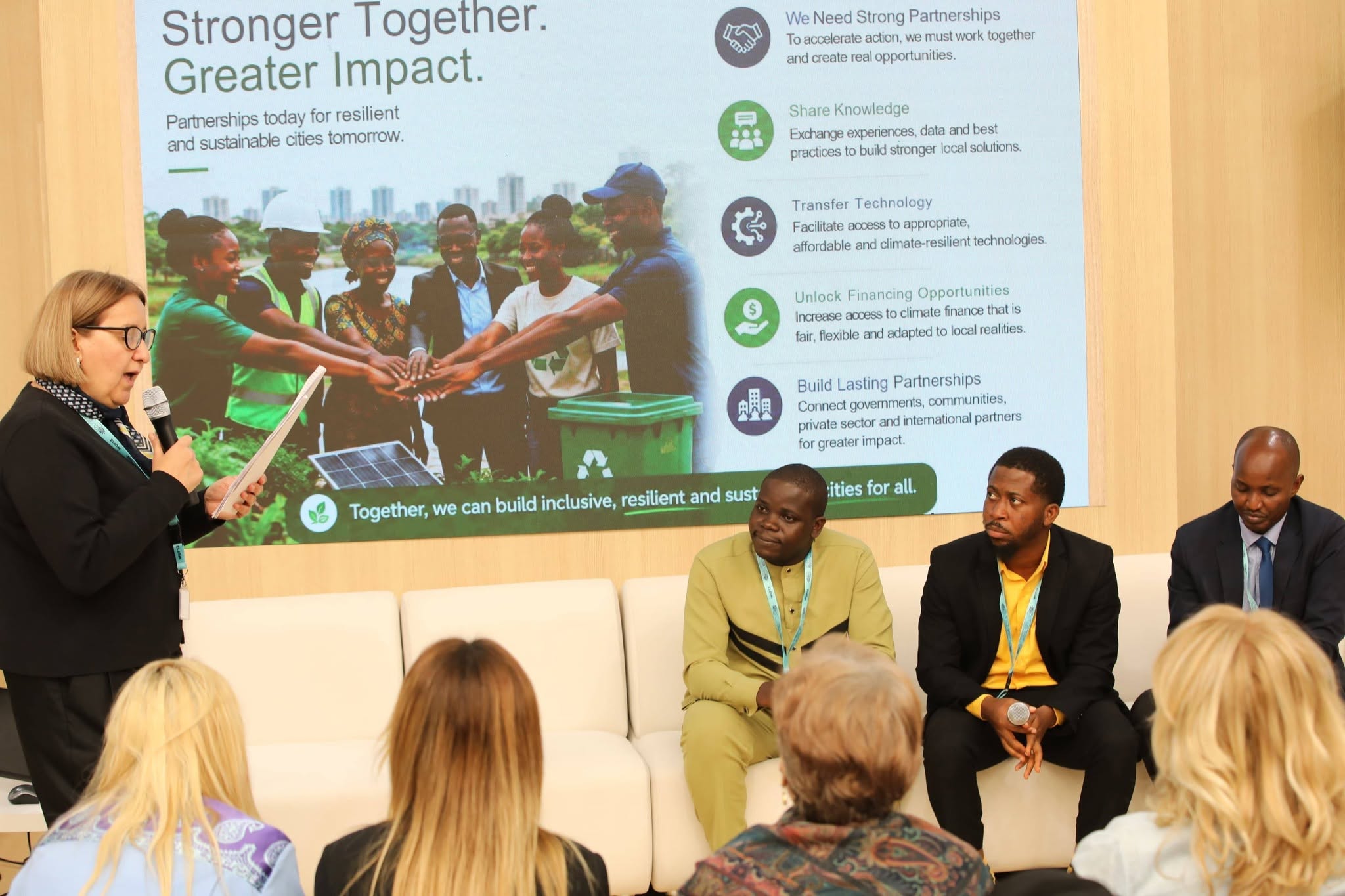
Representation from EECCA civil society organizations appeared relatively limited in comparison to other regions. However, one of the CAN EECCA member organizations, “Women, Development, Future Public Union,” hosted a side event, “The Role of Women and Youth in Urban Climate Resilience,” at WUF13 Urban Expo.
Outcomes and the Baku Call to Action
The principal outcome of WUF13 was the adoption of the “Baku Call to Action,” which sets out a shared commitment to advancing inclusive, resilient, and affordable urban development. The document reflects a stronger implementation-oriented framing compared to many earlier urban policy declarations, particularly through its emphasis on financing systems, multilevel governance, and community-led delivery.
At the same time, the Call remains primarily declarative in nature. While it articulates the need to shift from commitments to implementation, it provides limited specificity regarding measurable targets, financing mechanisms, accountability structures, or enforcement modalities. This indicates a persistent structural feature of global urban governance: a reliance on voluntary coordination frameworks that emphasize consensus-building while limiting binding implementation obligations.
Importantly, the document does reflect the language and priorities of civil society, Indigenous Peoples, women, youth, and vulnerable groups. Issues such as inclusion, gender-responsive housing, community participation, and secure land tenure are explicitly recognized. However, inclusion remains more visible in recognition and consultation than in the redistribution of institutional authority. As such, participatory language is increasingly embedded in global urban discourse, but without fully corresponding shifts in governance power structures.
Conclusion: implications for global urban governance
WUF13 reflects a broader evolution in global urban governance toward integrated, implementation-oriented, and resilience-focused frameworks. Cities are increasingly positioned as central actors in addressing interconnected global crises, including housing insecurity, climate impacts, inequality, and displacement.
At the same time, the Forum reveals persistent structural tensions. These include the gap between ambitious political narratives and limited operational accountability, the prioritization of adaptation over structural mitigation debates, and the expansion of participatory language without equivalent redistribution of decision-making power.
Overall, WUF13 signals a maturing but still incomplete transformation in global urban governance, one in which cities are recognized as central to global stability. Yet, the institutional mechanisms required to match this recognition remain uneven and underdeveloped.