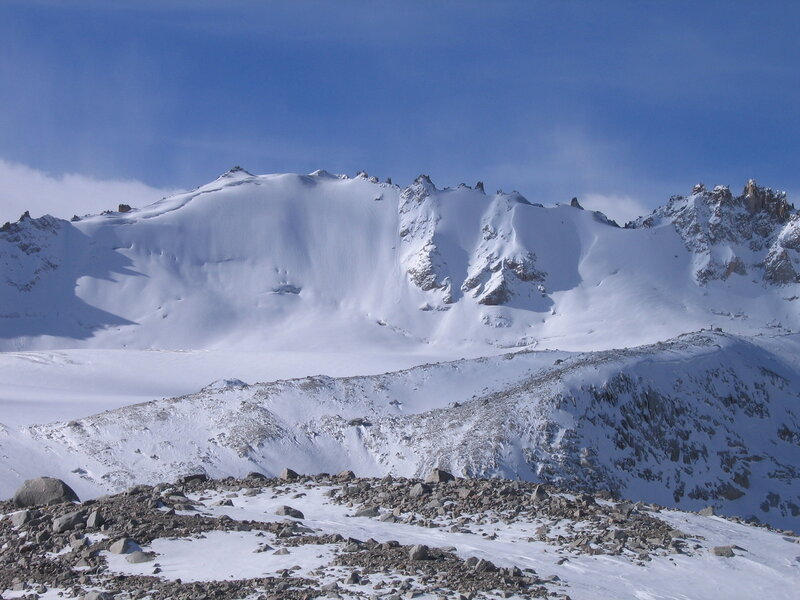
Glaciers are natural freshwater reservoirs. The Amu Darya and Syr Darya rivers — on which all five Central Asian countries depend — receive 70–80% of their flow from meltwater originating in the Tien Shan and Pamir mountain ranges. The condition of these ice masses directly determines whether the region will have enough water for livelihoods, agriculture, energy production, and food security.
A Region Under Pressure: Why Central Asia Is Melting Faster
Central Asia is among the regions most vulnerable to the impacts of climate change. Temperatures here are rising significantly faster than the global average. This is triggering a chain reaction: accelerated glacier melt is being compounded by a critical disruption of glacier accumulation processes.
The situation is further aggravated by increasingly frequent dust storms, particularly in Uzbekistan and Tajikistan. Dust settles on glacier surfaces, reducing their albedo — their ability to reflect sunlight. As glacier surfaces darken, they absorb more solar radiation, accelerating the melting process.
The key problem is that glaciers are no longer replenishing themselves. Due to climate change, winter snowfall — which should gradually compact into ice — is declining. As a result, glaciers are losing mass without sufficient replenishment.
At the Central Asian Regional Environmental Summit, heads of state and experts presented alarming projections: under the worst-case scenario, the region could lose up to 85% of its glacier volume by the end of the century. Regional leaders acknowledged that glacier loss represents a shared security threat requiring urgent collective action.
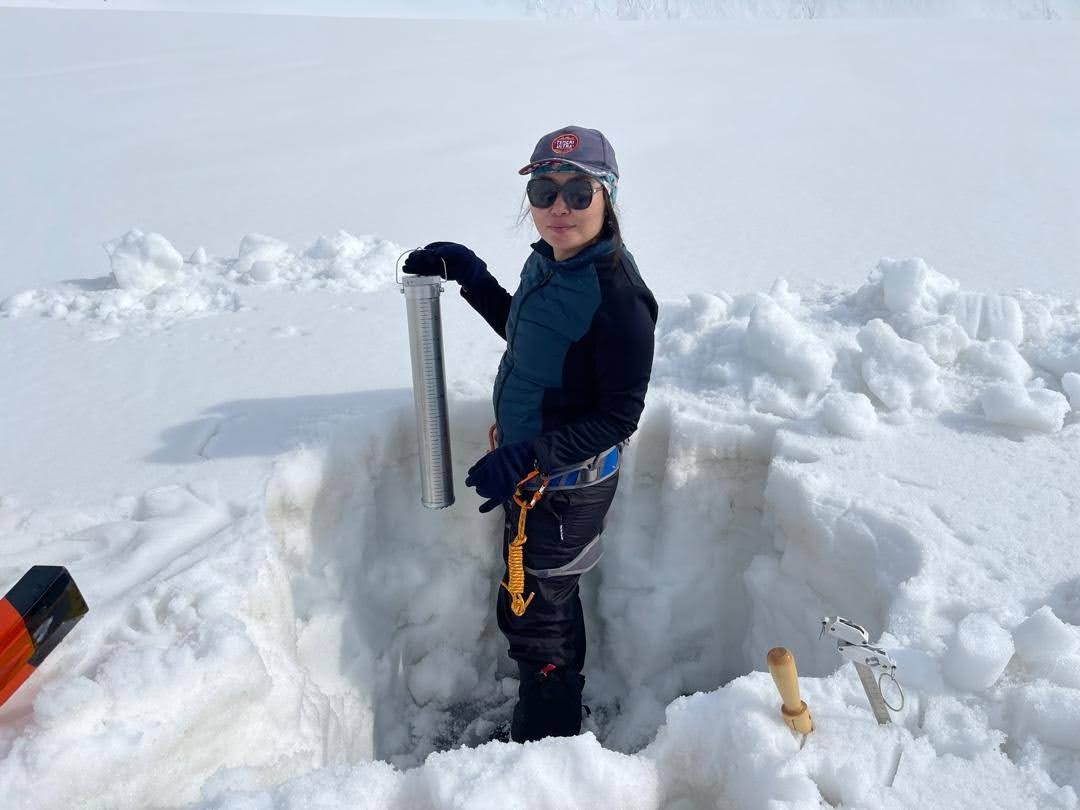
But what does the reality on the ground look like? We spoke with Gulbara Omorova — the only female glaciologist in Kyrgyzstan, who spends weeks on expeditions above 3,500 meters — to better understand what is really happening to the region’s glaciers.
Gulbara Omorova is a climate and glaciology researcher with more than ten years of field experience and a research fellow at the Institute of Water Problems and Hydropower of the National Academy of Sciences of the Kyrgyz Republic. She coordinates glacier monitoring and high-mountain research in the Northern Tien Shan at the Adygene Research Station and the Ala-Archa monitoring site. She is the only woman glaciologist in Kyrgyzstan and one of the few specialists in the country conducting direct instrumental glacier measurements at elevations above 3,500 meters.
Aizirek Almazbekova, Communications Manager at CAN EECCA: Gulbara, what is the current situation with glaciers in numerical terms? How much have they shrunk over recent decades?
Gulbara: The situation is critical. Looking at our data from Chuy Region, the numbers are alarming: since 1980, the Teztor Glacier has shrunk by nearly 60%. That is an enormous loss of surface area over such a short period. The Ak-Sai Glacier has lost around 38%, while the Ala-Archa Glacier has lost more than 33%. We are seeing that small glaciers are disappearing much faster than larger ones — even though they often supply water to small rural communities.
The problem is that most of these figures come from satellite observations. Out of the thousands of glaciers in Kyrgyzstan, only a small fraction are studied instrumentally — meaning that scientists physically travel to the site, install radar equipment, and measure ice thickness directly. In reality, we still do not fully understand what is happening inside most glaciers. We are working with fragmented data, and that is perhaps the greatest risk: we do not know the true condition of the majority of glaciers.
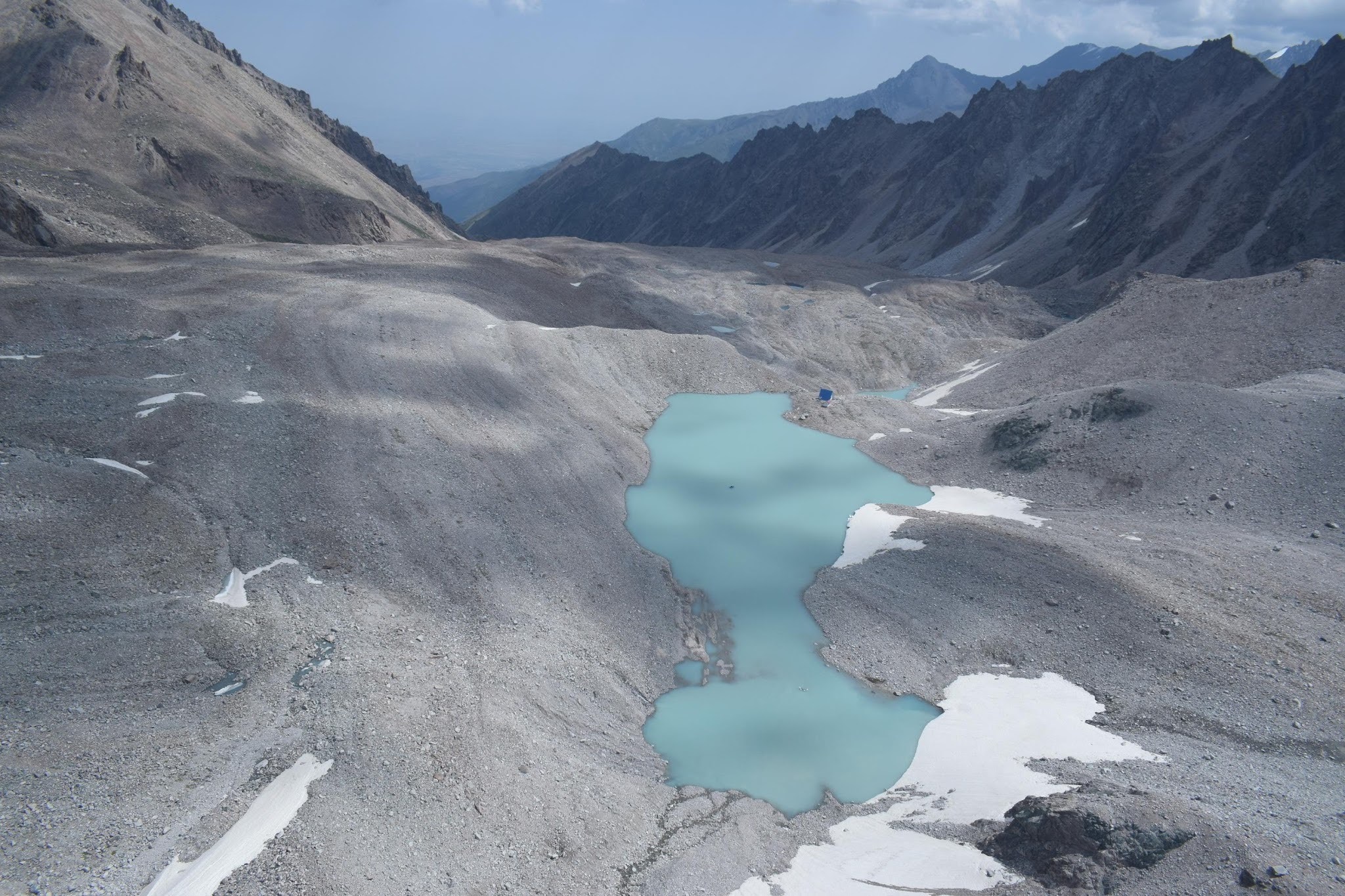
Statistically, it may even appear as though the number of glaciers has increased. But that does not mean there is more ice — quite the opposite. Large glaciers are breaking apart into multiple smaller sections as they melt. Reports may show a growing number of glaciers, but in reality these are signs of glacier fragmentation and collapse. These “fragments” — small glaciers — melt many times faster than large ones, posing a major threat to long-term water security.
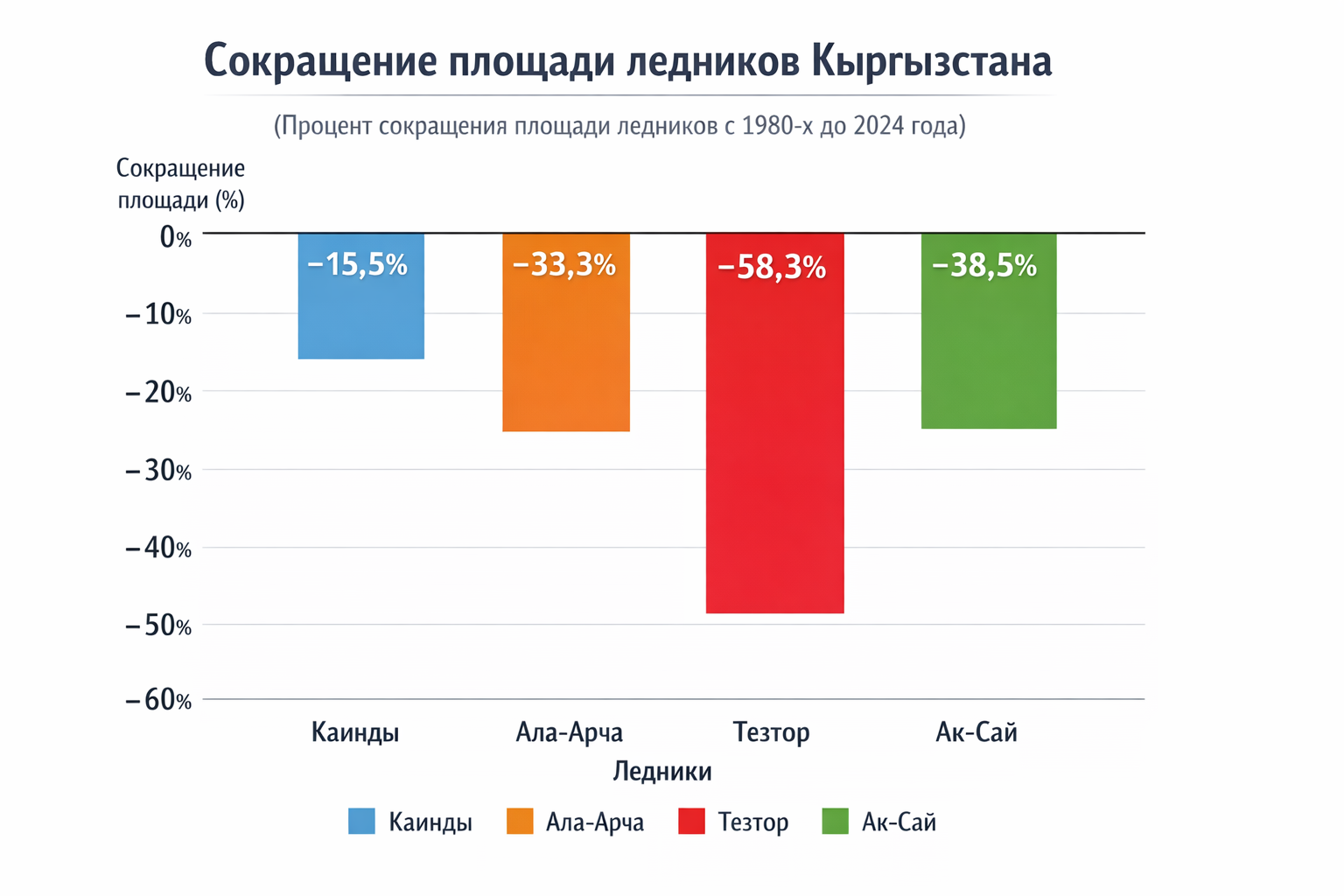 Based on data provided by Gulbara Omorova.
Aizirek: CAN EECCA, together with the Institute for Sustainable Development Strategy, is currently implementing the project “Regional Climate Dialogue for the Development of Mountain Regions”, which also focuses on glacier melt, water security, and the vulnerability of local communities. In your view, what are the main risks glacier melt creates for the region? Who is most vulnerable today?
Gulbara: Farmers are the first to feel the impact. They are under pressure from all sides. On the one hand, small hydropower plants are diverting water. On the other, authorities want to introduce water metering systems, yet there is no proper support or public information. Farmers simply do not know what is happening to the glaciers, when water will be available, or when intensive melting will begin each year.
Coordination between institutions is extremely weak. Scientists work separately — publishing papers and conducting research — but there is almost no connection with farmers. As a result, everything happens within the framework of short-term projects: once a project ends, the work stops as well. Yet agriculture and hydropower are deeply interconnected — this is the foundation of our lives. Right now, however, people on the ground are left without answers.
Aizirek: Could glacier melt lead to conflict in the region?
Gulbara: Conflict? Yes, it is a very real threat. We share water resources with neighboring countries, and they are already raising concerns. I believe we should instead openly demonstrate the condition of our glaciers and the scale of their degradation. Neighboring countries need to understand the reality: they must conserve water, reconsider agricultural policies, and reduce the cultivation of highly water-intensive crops such as cotton and rice. We need to show them that planting trees and changing approaches is essential. Our own farmers are already losing enormous volumes of water, and our neighbors should see what is truly happening.
But this openness does not exist today. In every country, this issue is tightly controlled. As long as information remains restricted, reaching agreements on fair water distribution and joint climate adaptation will be nearly impossible.
Aizirek: Am I right in understanding that we actually do not know the real condition of most glaciers?
Gulbara: Exactly — and that is the core problem. We lack systematic, long-term, and, most importantly, continuous monitoring. Scientific approaches to glacier research remain underdeveloped. There is no institutionalized system of regular expeditions dedicated to in-depth studies. Much of what appears in reports today is based on isolated field visits — researchers arrive, observe certain indicators, and leave. And that is where the process ends.
For example, in Germany, where I studied, they use advanced technologies, drones, and specialized software for deep analysis — tools that require investment and procurement. A proper field expedition means arriving at a glacier with professional equipment and radar systems to collect instrumental measurements directly. Without accurate data, we simply cannot respond effectively to climate change. We are trying to manage a resource whose actual volume we do not know.
Aizirek: What needs to be done right now to protect our water resources?
Gulbara: We need to seriously invest in this work — in systematic monitoring of glaciers and glacial lakes. We need an effective early warning system. And, of course, water resource management and infrastructure must be improved so that water systems can function more efficiently.
Forests must be restored. Trees should not be cut down under any circumstances. On the contrary, suitable species should be planted and properly maintained to ensure they survive and grow. Protecting the ecosystem itself is essential.
And I also believe that regional cooperation remains extremely weak. We need to work much more closely with neighboring countries. All these infrastructure projects — dams, hydropower plants, and other developments — must also be taken into account, because they directly affect the entire situation.