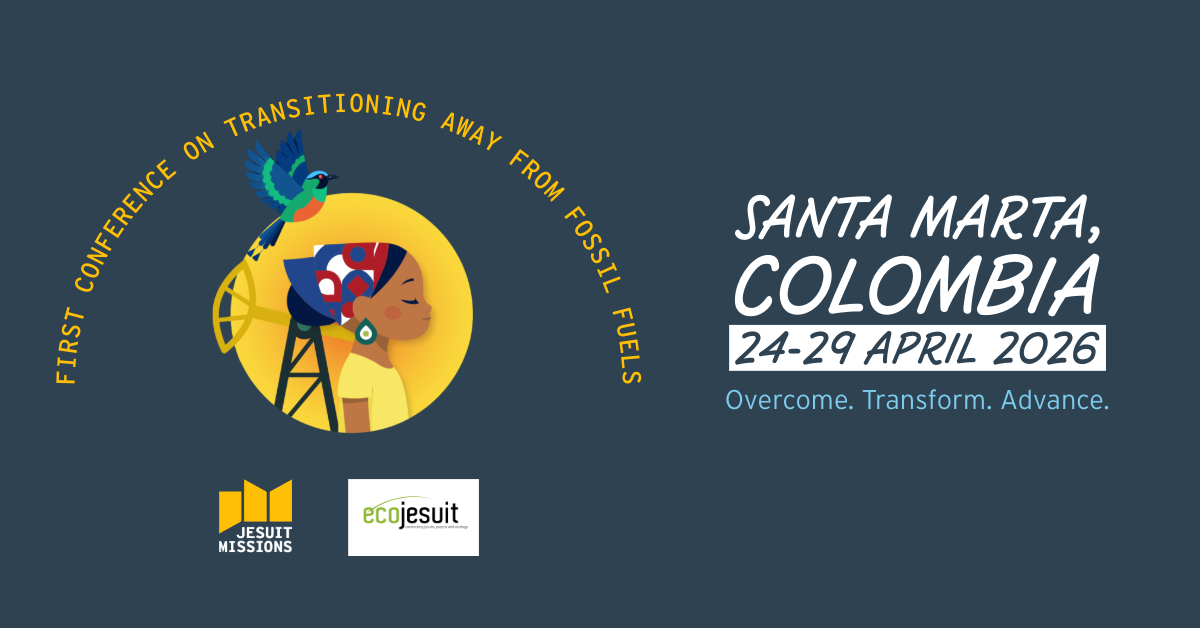
 In April 2026, the Colombian city of Santa Marta hosted an event that may mark a turning point in global climate policy — the first international conference on Transitioning Away from Fossil Fuels (TAFF).
For a long time, official UN climate negotiations have focused primarily on reducing emissions in general. Direct references to the need to phase out coal, oil, and gas have often been avoided due to the difficulty of reaching consensus with fossil fuel–exporting countries. Yet fossil fuels are currently responsible for more than 75% of global greenhouse gas emissions.
The Santa Marta conference, co-organized by Colombia and the Netherlands, became a platform for a coalition of ambitious countries. Experts and diplomats focused on concrete pathways to phase out fossil fuel production — the primary driver of the climate crisis. For the EECCA (Eastern Europe, Caucasus and Central Asia) region, which is among the most vulnerable to the impacts of climate change, the outcomes of Santa Marta are particularly significant.
Unfortunately, the region was only weakly represented. The geographical distance from Colombia and logistical constraints created barriers for most members of our network. In addition, countries in the region still remain insufficiently ambitious when it comes to addressing the root causes of the climate crisis. Nevertheless, this does not diminish the importance of the event for the region.
Climate expert and climatologist Aleksey Kokorin, who closely followed the process, notes that the main achievement of the conference was the launch of a permanent dialogue:
“The main outcome is the creation of a cooperative process for countries that are willing to phase out fossil fuels in the near future. The goal of the conference was not to reach a negotiated consensus, but to develop a shared understanding and practical recommendations.”
According to him, progress is evident: the “seeds have been planted,” and much now depends on how effectively leading countries implement these recommendations.
Key outcomes of the conference:
Continuity of the process: The conference was not a one-off event. The next meeting (TAFF 2) will take place in 2027 in Tuvalu, preceded by a preparatory meeting in Ireland.
Three workstreams: By the next summit, experts will develop roadmaps for fossil fuel phase-out, proposals for reforming the global financial system (to help developing countries escape debt traps), and mechanisms for green trade.
Scientific foundation: A dedicated scientific panel (SPGET) has been launched to model transition pathways aligned with limiting warming to 1.5°C.
Impact on COP31: All outcomes from Santa Marta will be formally submitted to the leadership of the next UN climate summit in Türkiye, with the aim of making fossil fuel phase-out a central agenda item.
Independent energy expert Tatiana Lanshina noted that while the conference did not produce major breakthroughs and several key emitters — including China, India, the United States, and Russia — were absent, the event still represented an important step forward:
“TAFF brought together 57 countries representing around 20% of global fossil fuel production, demonstrating growing international engagement on managing the transition away from fossil fuels. The conference also produced recommendations from the international scientific community covering key challenges such as reducing economic dependence on coal, oil and gas, reshaping fossil fuel supply and demand, and fostering international cooperation and climate diplomacy.
Looking ahead, TAFF has the potential to emerge as a specialised mechanism within global climate governance, building the coalition of countries willing to advance the fossil fuel transition beyond the UNFCCC framework while helping to inform and strengthen the multilateral process.”
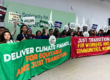
Particular attention at the conference was given to just transition. Participants discussed how to ensure that the phase-out of fossil fuels supports workers and communities whose economies have depended on resource extraction for decades. Civil society emphasized that this process must be inclusive and fully financed through grants rather than new loans. It is essential not only to close down fossil fuel industries but also to ensure social protection, retraining, and access to clean, affordable energy for all, preventing new forms of inequality.
Tasneem Essop, Executive Director of Climate Action Network International, emphasized the significance of the moment:
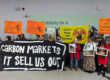
“The People’s Summit was three days of dedication, energy, and hope, reflecting decades of struggle and a shared belief that the fossil fuel era can and must end. Nearly 1,000 organizations came to Santa Marta not just to witness, but to set the terms. Now governments must comply. CAN International and our network members will use every opportunity — at national and international levels — to ensure this conference continues beyond Santa Marta. The work of implementation begins now.”
More on the position of the international community can be found in the official press release by Climate Action Network International here: Santa Marta plants the seeds of a fossil-free future — civil society will hold governments to account.