Published by Agora Energiewende on 26 June 2026, this policy brief examines how Kazakhstan can scale up renewable energy while keeping its power system reliable and affordable. The analysis is based on detailed power system modelling and operational assessment of the country’s electricity grid, focusing on the flexibility needed to integrate growing shares of wind, solar and small hydropower.
The research finds that renewables could supply more than a third of Kazakhstan’s electricity by 2035 — up from just 7% in 2025 and 0.1% in 2015 — provided flexibility is anchored as a core principle in system and infrastructure planning. Achieving this will require a diverse mix of flexibility solutions: grid modernisation, energy storage, demand-side response, improved forecasting, stronger regional interconnections, and more flexible operation of existing thermal power plants.
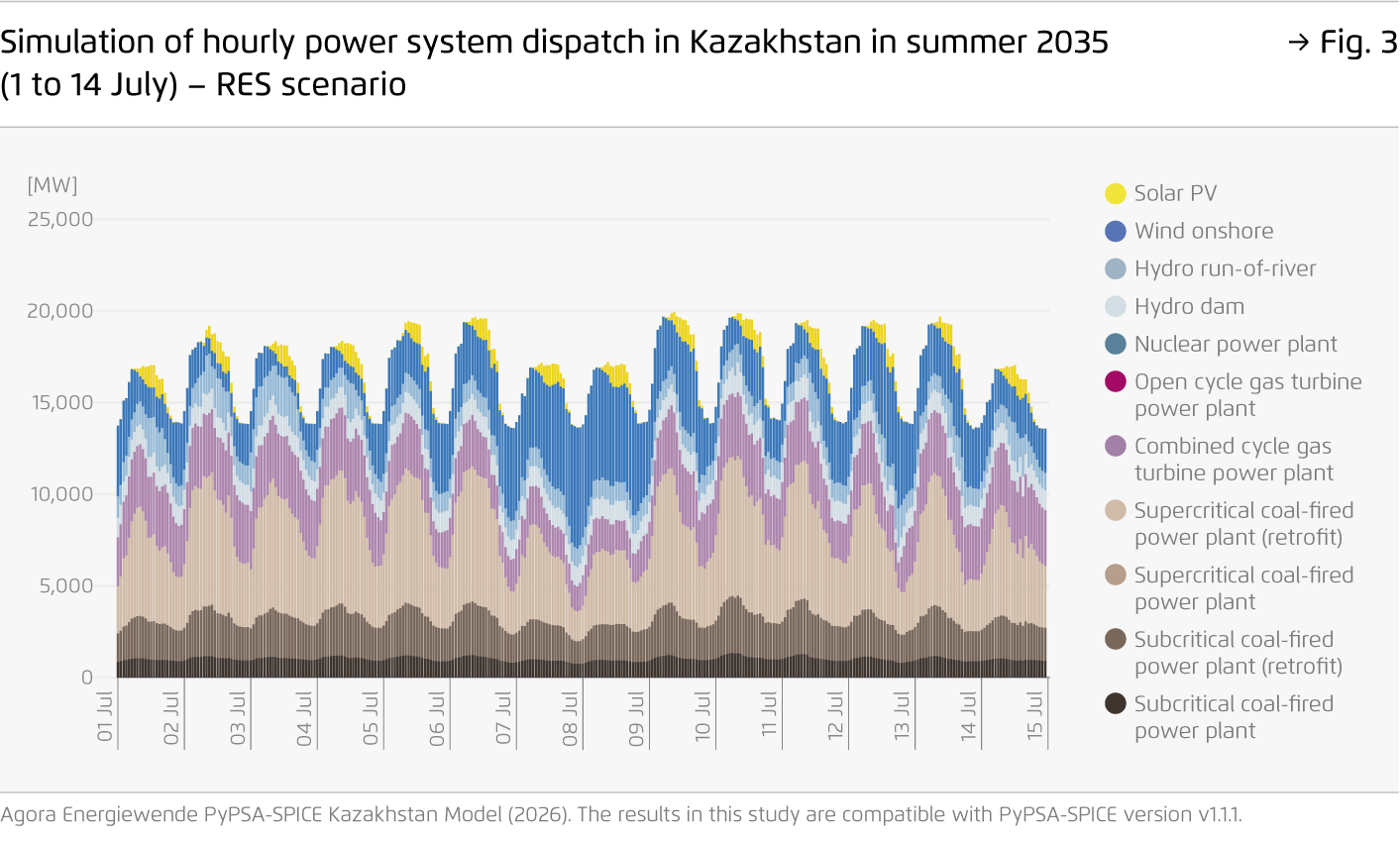 A particular focus is placed on flexibilising Kazakhstan’s ageing coal fleet (average lifetime over 50 years) through control system upgrades, retrofit investments and thermal storage — positioned explicitly as a cost-effective, transitional measure rather than a long-term solution, with the brief stressing the need for a clear coal phase-out strategy alongside it. It also offers recommendations for strengthening market design and system operation, building on Kazakhstan’s existing capacity market and automatic frequency and power control mechanisms, to better remunerate flexibility services and attract investment.
The brief is aimed at policymakers, regulators and energy sector stakeholders working on aligning infrastructure investment and market rules with the demands of a modern, low-carbon power system.
Read full text: Kazakhstan’s readiness for renewable energy integration at scale