 Central Asia remains one of the most climate-vulnerable regions in the world. Accelerating glacier melt in the Tien Shan and Pamir mountains, prolonged droughts, destructive dust storms, and the critical shrinking of the Caspian and Aral Seas are no longer abstract risks — they are an everyday reality for millions of people.
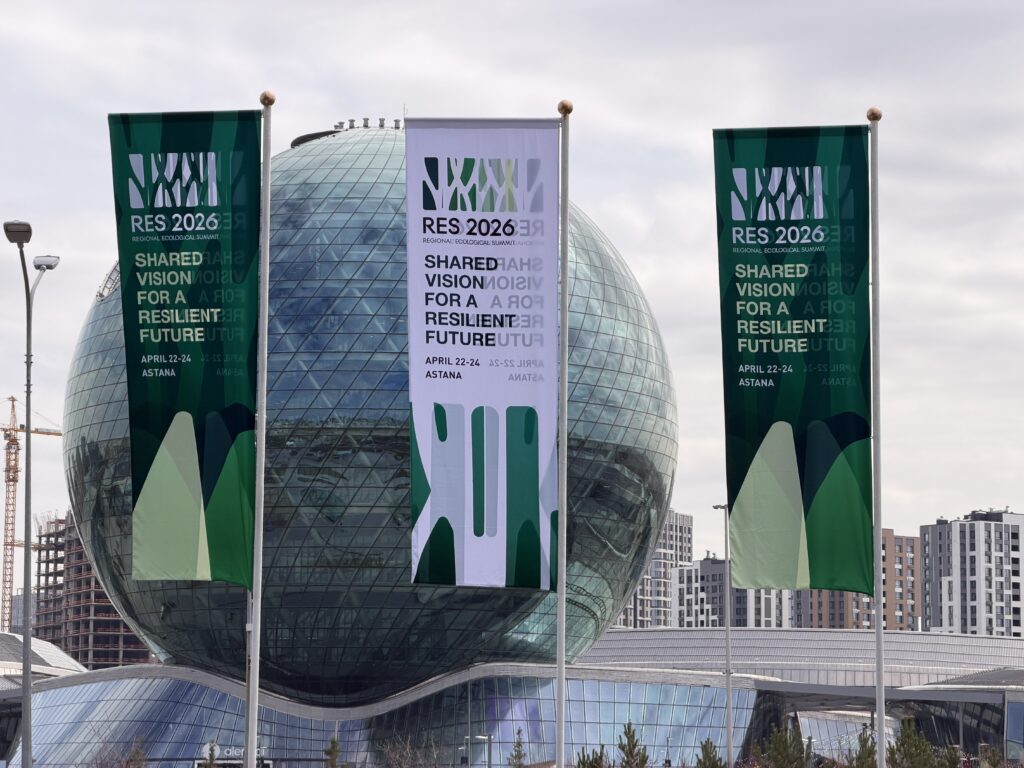
Against this backdrop, the 2026 Regional Environmental Summit (RES) in Astana became an important attempt to bring together regional leaders specifically to focus on the environmental agenda. The CAN EECCA Secretariat and 10 members of the network participated in the forum to assess which issues will define Central Asia’s priorities over the next five years, and whether the decisions made will translate into real tools for protecting the region.
 Complex navigation due to merging of summit and conference
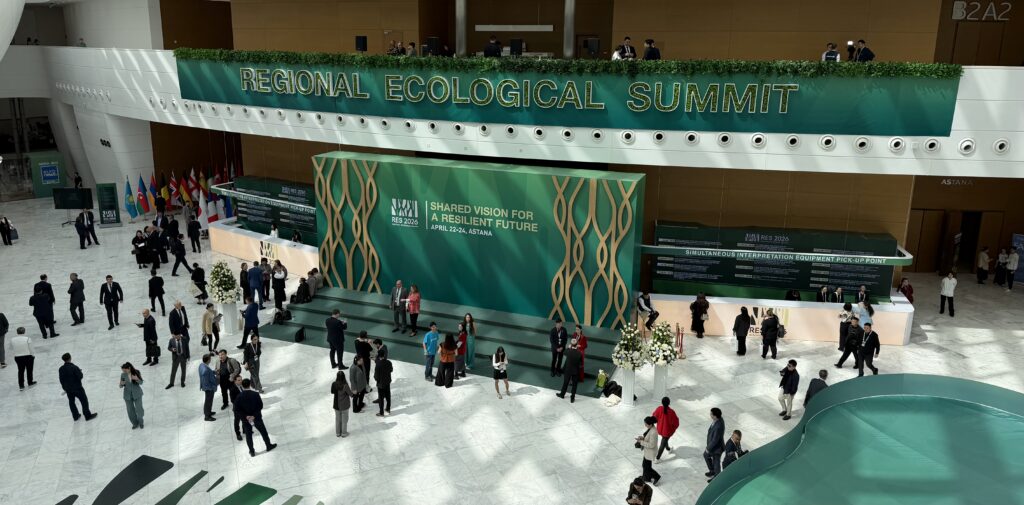
One of the main organizational challenges was the combination of two events with different formats and purposes: the political Regional Environmental Summit (RES) and the 8th Central Asian Climate Change Conference (CACCC).
The programme was extremely dense, making it easy for participants to lose orientation: parallel sessions were running simultaneously, creating the impression that key discussions were happening everywhere at once. The situation was further complicated by the RES 2026 Expo, where events were also constantly taking place. As a result, it was difficult to navigate the summit in a structured way.
The summit itself opened with a closed-door meeting of regional presidents. Civil society representatives, independent experts, and journalists were not allowed access — entry was strictly by invitation.
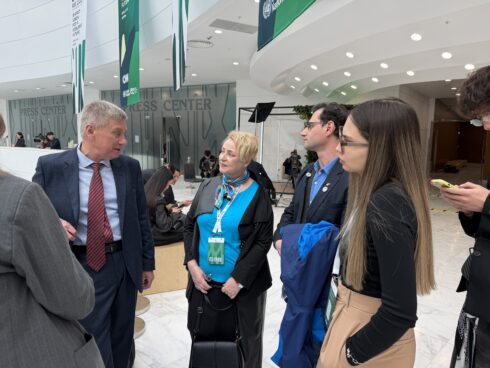
 CAN EECCA member Alexey Kokorin noted that merging the two formats did not improve the quality of discussions:
“The summit is important, of course. But combining CACCC with it actually undermines both processes. On the first day, everyone was naturally focused on their presidents — especially government officials. Still, I think CACCC is achieving its purpose. It’s very good that this tradition exists: to meet and coordinate efforts. It’s not easy for five countries to come together. It’s easier, as they say, to make friends across the ocean than with your neighbour in the same apartment building.
Either way, meeting every year to discuss climate issues is important. And some level of specialization and division of responsibilities between countries is necessary — some have water, others have electricity, and the same applies to climate policy.”
A political platform lacking inclusivity
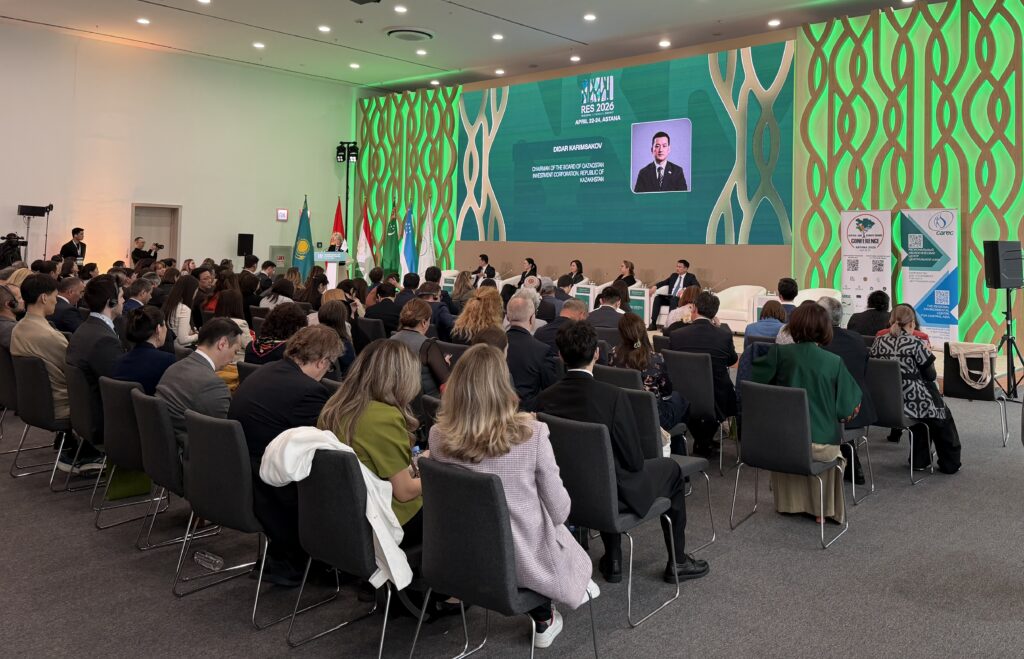 Despite its scale, the summit faced criticism for the lack of meaningful dialogue. Many sessions did not allocate time for questions from the floor, and speakers were predominantly politicians and business representatives.
Civil society participation is essential at such platforms to ensure transparency in decision-making, provide independent expertise, and reflect the interests of people who are on the frontlines of climate impacts.
The lack of inclusivity became one of the key concerns raised by independent participants.
Aigerim Kapar, Artcom Platform / CareForBalhash:
From all the sessions I attended and listened to, the voices of local communities and environmental NGOs were barely heard. The agenda was largely political. We can clearly see that business has taken over many platforms and is advancing its own interests.
At a regional environmental summit, it is crucial to ensure balance — to include the perspectives of local communities, people who are directly facing environmental challenges today, and who know what solutions they need. These issues must be addressed collectively. Where are the people? Where are their interests? Where are the interests of ecosystems and biodiversity?
This view is shared by Svetlana Mogilyuk from the EcoForum of Kazakhstan:
I think Kazakhstan did a good job overall. I saw the preparation process, many things changed, and in general the summit turned out well, with strong political representation.
The only drawback — and I have already told the organizers this, and they generally agree — is the lack of civil society. There is a kind of ‘pseudo-civil society’ — ceremonial sessions with volunteers and youth — but that does not represent the full range of civil society initiatives. Civil society has strong expertise. It should also be able to voice its concerns. Unfortunately, there are many negative developments in our countries, including pressure from extractive industries on communities. I did not see this issue addressed here.
Fur on the runway at a climate summit?
One of the most controversial moments was a fashion show held at the EXPO venue. Designer Aidarkhan Kaliyev presented a collection that included natural fur from the corsac fox, a species listed in the Red Book.
Bermet Borubaeva, founder of the #BishkekSmog initiative:
After the show, the designer proudly confirmed that it was real fur and that nothing else would work for the runway. It is deeply concerning that such a message is being presented at a platform where every initiative is supposed to support climate action, sustainability, and ecology.
All day we discussed biodiversity and nature conservation, and in the evening we saw the bodies of unique animals used for vanity. This platform should be setting new standards in sustainable fashion, where fur simply has no place. This is a global trend in the fashion industry, and we need to recognize the value of life — not only human life.
EXPO RES 2026: a showcase of green technologies and environmental art
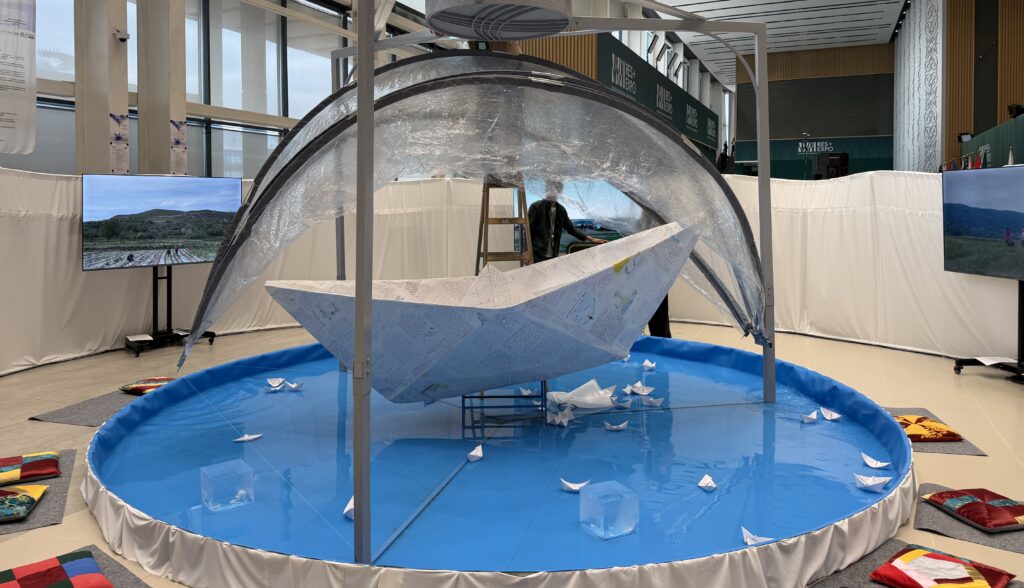 The “FALAK: Song of Water and Land” exhibition featured Artcom Platform, a CAN EECCA member, presenting the film Balqaş Jyry and hosting a discussion on ecology and contemporary art.
In the neighboring hall, the large-scale RES 2026 EXPO showcased applied environmental solutions. The space was densely packed with operational technologies, decarbonization data visualizations, and ready-to-implement systems.
From French water management technologies and Chinese AI-based smart city platforms to satellite methane monitoring and regional startup pitches — the projects covered nearly every key area of sustainable development. The expo functioned as a practical interface where government, business, and science could engage with real-world responses to the region’s climate challenges.
Nugzar Kakhreidze, RIGDOC:
I think the summit is interesting. It reflects the most important climate challenges facing Central Asia. We can identify several key directions:
First, glacier melt and mountain system changes.
Second, greening efforts to prevent drought and desertification.
Third, the search for new technological pathways for mitigation and adaptation to climate change.
CAN EECCA members at the summit: COP30 reflections
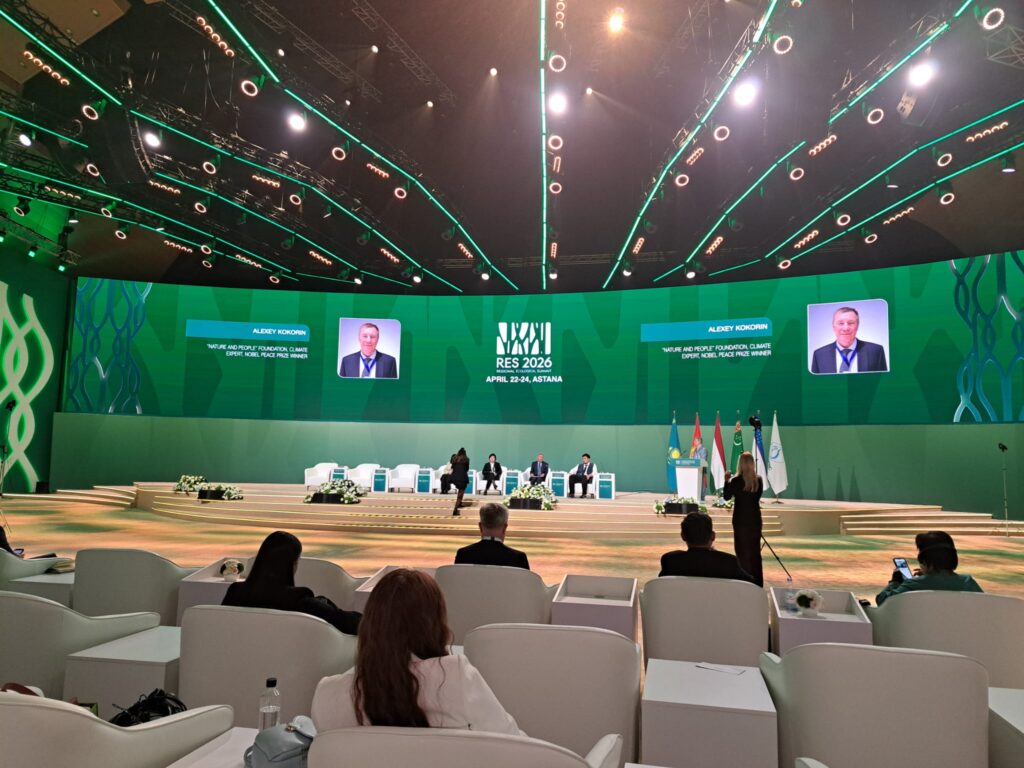 On the sidelines of CACCC, Alexey Kokorin presented an analysis of COP30 outcomes. Despite widespread criticism of the slow pace of global negotiations, he noted that the world is steadily moving toward carbon neutrality.
For Central Asian countries, it is now critical not to remain on the sidelines, but to actively implement Just Transition mechanisms. This is essential to ensure that the large-scale transformation in energy and agriculture does not turn into a social crisis for the most vulnerable groups, whose livelihoods depend directly on natural resources.
The full report can be read here.
Failed dialogue: the Caspian Sea case
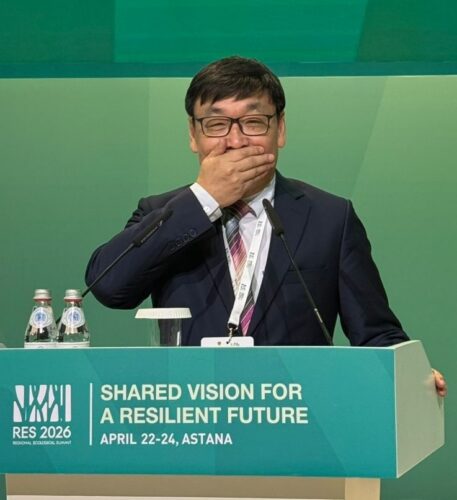
Another notable incident was the cancellation of a panel discussion on the environmental impact of oil extraction in the Caspian Sea. The panel was expected to include Vadim Ni (Save the Caspian Sea initiative) as well as representatives of major oil and gas companies — Karachaganak Petroleum Operating, NCOC, Tengizchevroil, and KazMunayGas. However, the discussion was cancelled at the initiative of the oil and gas companies, and no public dialogue took place.
“This is not the first time that major oil and gas companies have avoided public dialogue with us at such events. Nevertheless, we continued our work during the Regional Environmental Summit and the International Expo in Astana,” says Vadim Ni.
The text of Vadim Ni’s cancelled speech can be read here.
Despite the cancellation, the Save the Caspian Sea team continued its engagement at RES 2026 EXPO, highlighting the Caspian’s triple environmental crisis and creating space for dialogue with local communities.
A space for internal network coordination
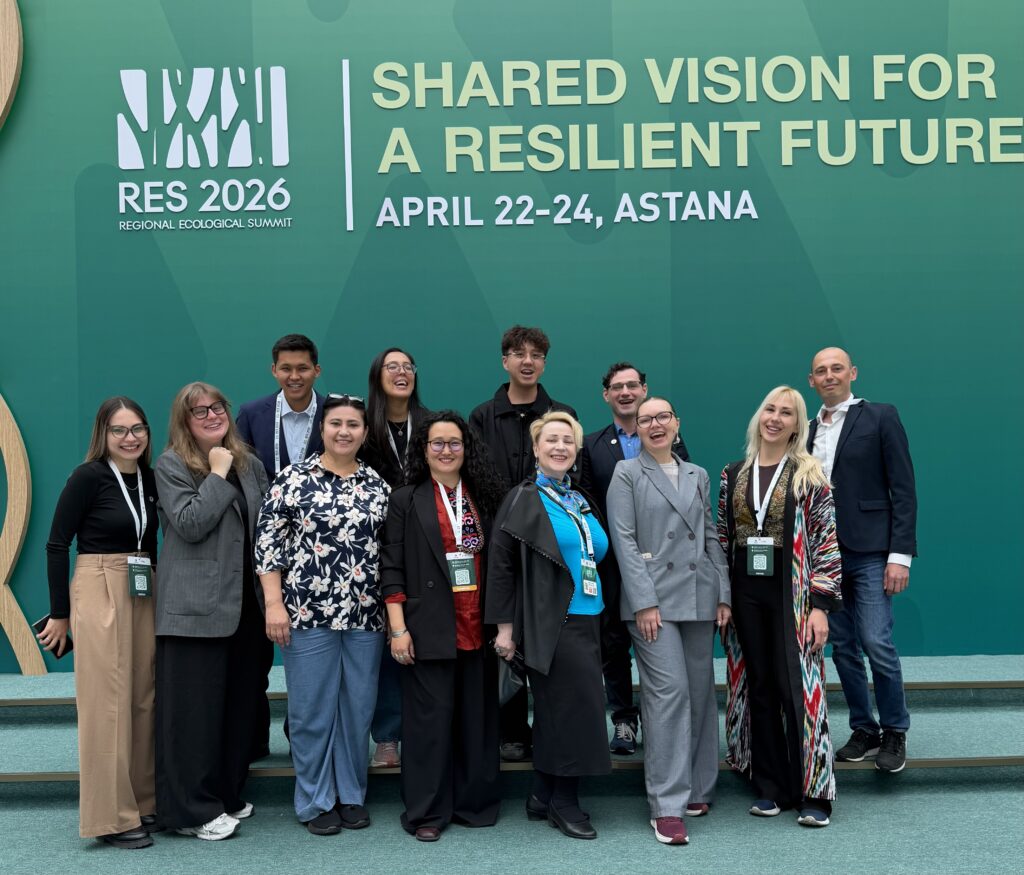
The Astana summit also became a rare and valuable opportunity for CAN EECCA members to meet in person. The network used the time for strategic coordination through two key working groups:
Action Coordination Group (ACG): Led by Nugzar Kakhreidze, participants discussed the updated network structure and recent updates from CAN International.
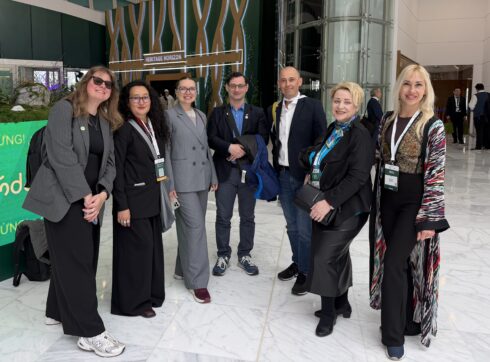
Policy Coordination Group (PCG): Together with Alexey Kokorin, members discussed the outcomes of CACCC and the first Fossil Fuel Phase-Out Conference in Santa Marta. Online, Sopiko Babalashvili joined to present opportunities for participation in the UNCCD CSO Panel under the UN Convention to Combat Desertification, as part of engagement in COP in Mongolia and the upcoming biennial cycle.