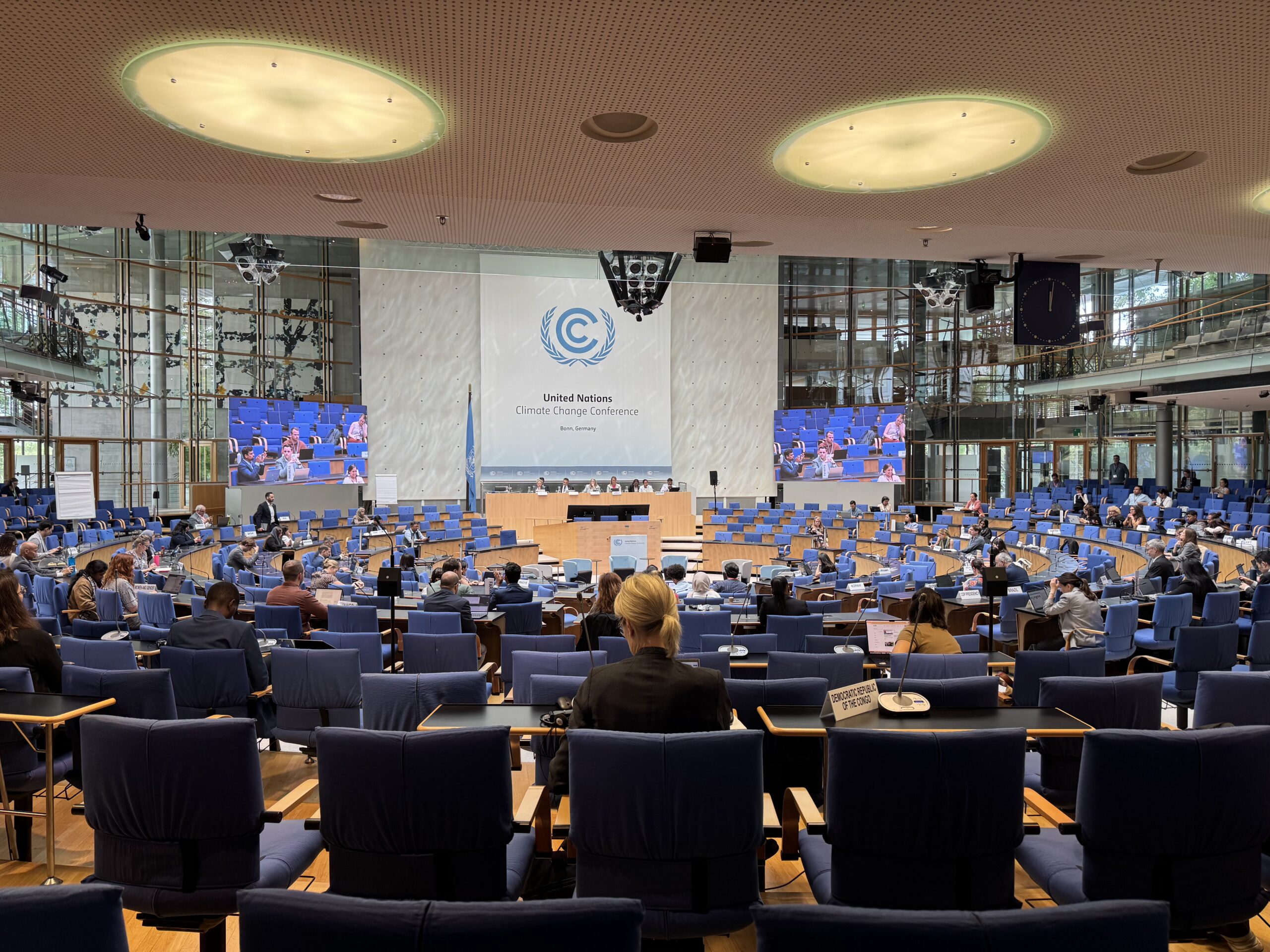
 Two weeks of negotiations in Bonn (June 8–18, 2026) revealed the same pattern across nearly every agenda item: delegations readily agree on goals, then stall the moment the conversation turns to who will pay for them. No country openly denies the need to support vulnerable communities or workers losing their jobs as fossil fuels are phased out.
During this round of climate talks, negotiators managed to agree on a text on just transition, outlining how the future mechanism — the Belém Action Mechanism — should function. Yet it remains unclear who will make decisions within this mechanism, to whom it will be accountable, and where the resources to launch it will come from.
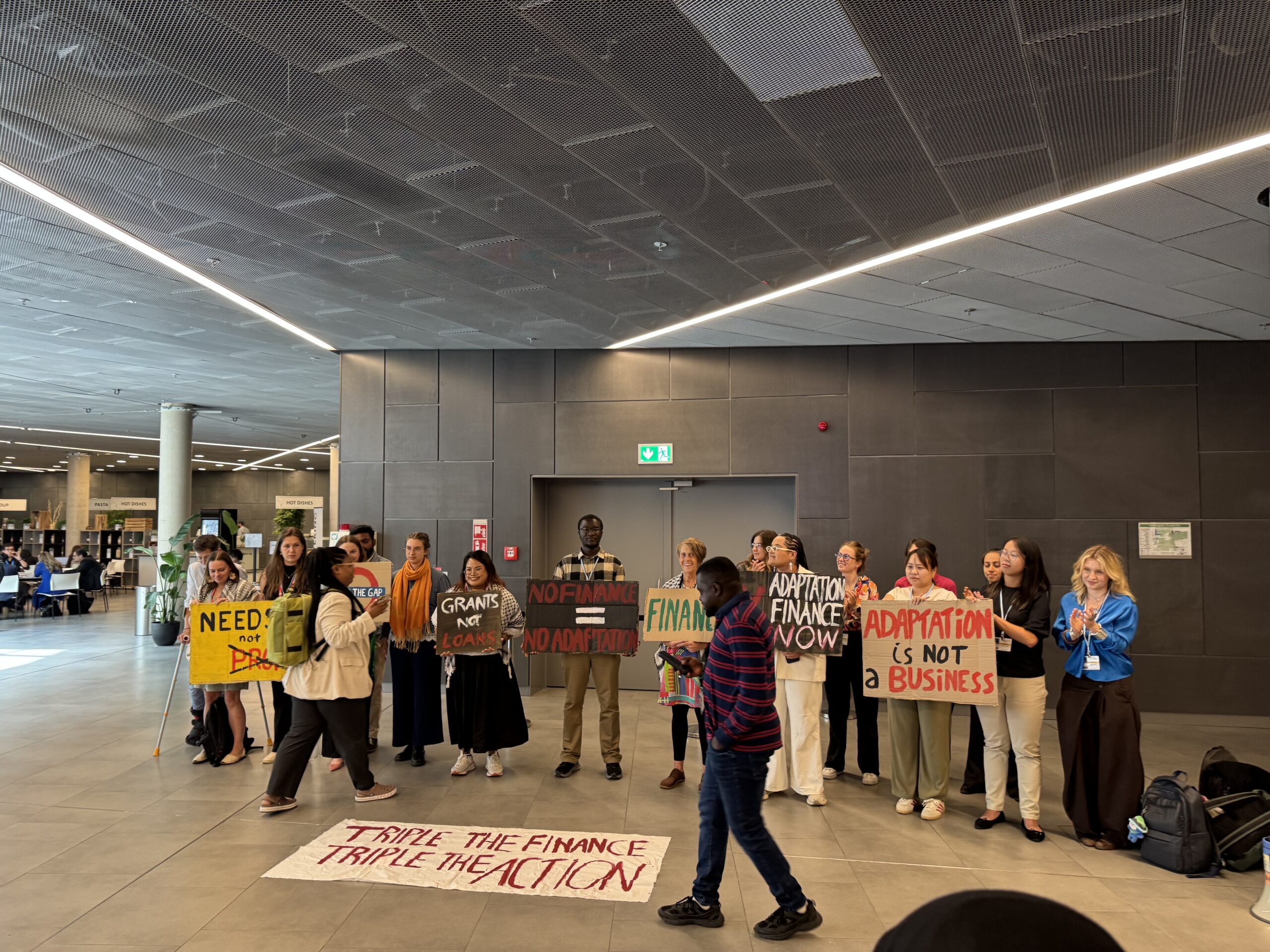
Progress on adaptation was far worse. Talks on the Global Goal on Adaptation ended without a result: developed countries never confirmed the tripling of adaptation finance promised at COP30. Parties couldn’t even agree on an interim text — it was rejected outright, meaning this work will have to start from scratch at COP31.
A similar story played out with the mitigation work programme, where negotiators failed to agree on either a mandate or a shared understanding of next steps. The session formally closed with a procedural note, but in effect, every contentious issue was simply pushed into next year.
Finance remained another central issue. At every session, developing countries repeated the same message: without funding, technology transfer, and stronger national capacity, commitments will remain nothing more than words on paper. Meanwhile, most developed nations continue to avoid specifics on grant-based public finance — precisely the form of support that’s needed most.
Beneath the official discussions in Bonn ran another theme delegations tend to avoid raising directly: while the world struggles to find money for adaptation and just transition, global military spending keeps climbing and now exceeds $2.7 trillion a year. By comparison, the sums debated at climate negotiations are typically counted in billions, not trillions. As activists point out, if governments can mobilize funds for war this quickly, the claim that “there’s no money” for adaptation and loss and damage starts to look like a political choice rather than a genuine resource constraint.
The scale of this damage is significant for our region too: since February 2022, the Ukrainian environmental organization Ecoaction has been documenting cases of possible environmental damage caused by Russian aggression, recording nearly 2,600 such cases by spring 2026, while Ukraine’s Ministry of Economy, Environment and Agriculture has already estimated military-related environmental damage at 6.385 trillion hryvnias. This includes strikes on nuclear power plants, ports, and hazardous waste storage sites, as well as chemical and metallurgical facilities, along with direct damage to nature reserves, forests, steppes, and marine ecosystems. The organization stresses that a complete and final assessment of the environmental catastrophe caused by Russian aggression will only be possible once hostilities end and territories are demined — meaning the true scale of the damage is currently being systematically underestimated.
The phase-out of coal, oil, and gas came up in a wide range of contexts but never developed into its own dedicated negotiating track. Talks also touched on the COP30 Presidency’s roadmap, the COP31 initiative on reaching 35% electrification by 2035, and discussions around the “Belém effect.”
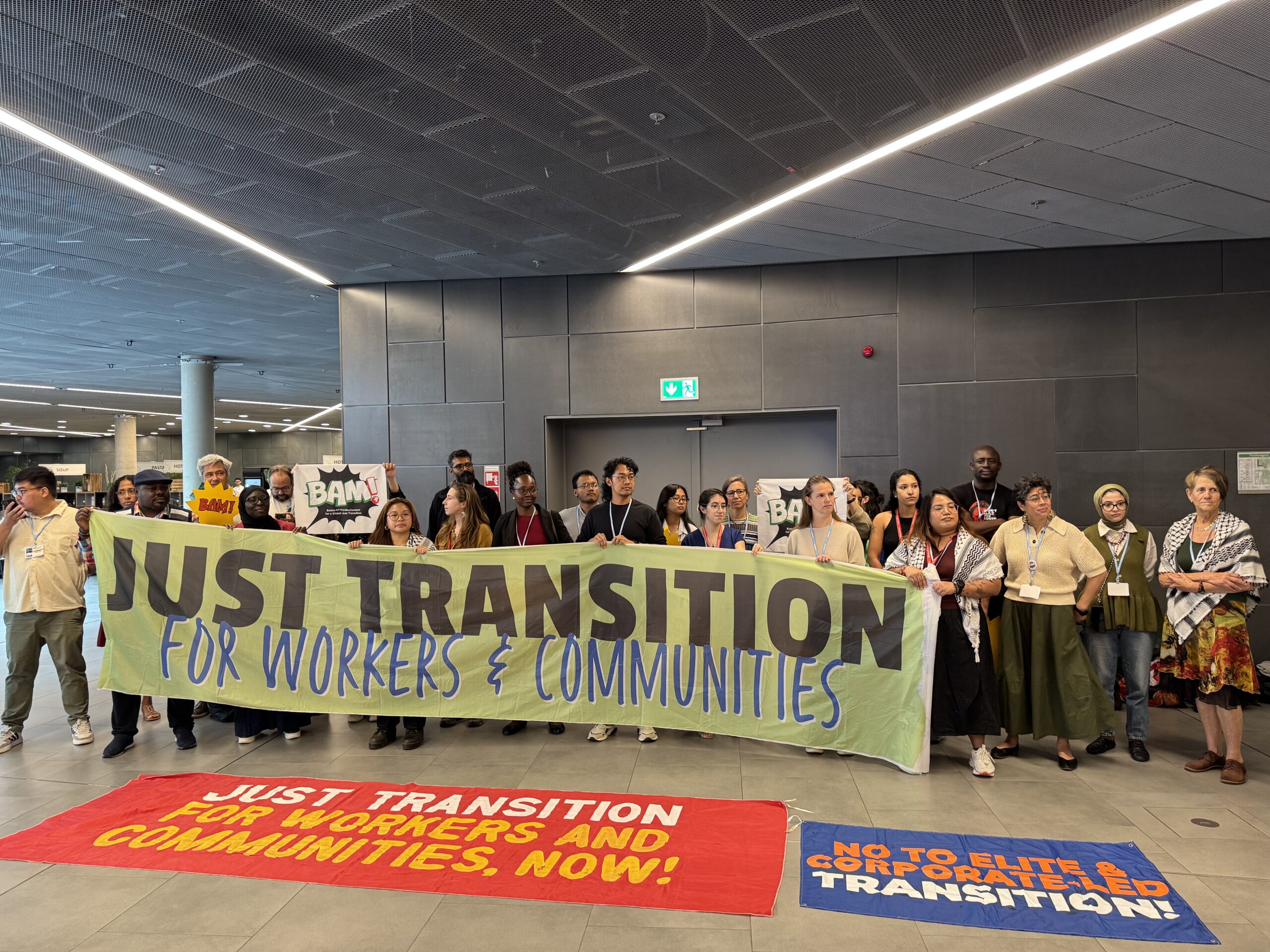
Bonn once again made clear that the real divide isn’t between those who support climate action and those who oppose it. It’s the divide between acknowledging a problem in words and being willing to fund it in practice. Every time negotiations approached actual financial commitments, parties retreated into discussions of procedure, review timelines, and mandate language. For people in our region — who are already losing their homes to floods and extreme weather, and their harvests to drought — this gap between words and money is not an abstraction.
Participation of CAN EECCA Network Members
Network members don’t typically take an active part in the Bonn sessions, due both to a lack of funding and to the difficulty of obtaining visas to attend conferences in the European Union. Despite this, four network members took part in this year’s negotiations, representing the interests of their organizations and local communities.
Maria Kolesnikova, facilitator of the CAN EECCA Friends platform, representative of MoveGreen, Kyrgyzstan
The SB64 session in Bonn was meant to be an important step toward COP31 and an opportunity for real progress on several key priorities set at COP30 in Belém, including just transition and the Global Goal on Adaptation. In practice, negotiators did manage to agree on a text on just transition that will serve as the basis for future decisions, but once again there was no meaningful progress on climate finance. Against this backdrop, the voice of civil society and the Climate Action Network rang out especially clearly, with actions that once again drove home a simple but essential truth: there can be no climate justice without human rights, and no adaptation without finance. This point felt particularly painful for our region, where climate challenges are compounding growing pressure on civil society, and environmental activists and defenders face increasing harassment and detention.
Daniel Avanesian, representative of Khazer, Armenia
Attending SB64 in Bonn was my first opportunity to experience international climate negotiations in person. Before arriving in Bonn, I expected most discussions to focus on climate solutions, new technologies and ways to reduce greenhouse gas emissions. While these topics were certainly part of the conference, I was surprised by how much of the conversation revolved around politics, economics, and especially climate finance.
The topic that seemed to come up almost everywhere was climate finance. Countries, or civil society organizations, many conversations eventually came back to the same challenge: a lack of financial resources, technology or institutional capacity. Another discussion that caught my attention focused on international taxation and its possible role in climate finance. I found myself wondering whether greater tax harmonization would always benefit smaller economies, many of which rely on competitive tax systems to attract investment. It was one of several moments during the conference where I realized that there are rarely simple answers.
Personally, the topic I enjoyed most was Green Trade because it combines climate policy with economics and international trade. The discussions covered environmentally friendly goods and services, emissions trading systems, and sustainability certification schemes.
Nazeli Vardanyan, Director of the NGO “Forests of Armenia”
What interests our organization most is forests and the COP30 forest roadmap. This wasn’t discussed much in the official sessions, but the Global Forest Coalition organized a side event where we were able to present our projects. It was also interesting to take part in events on climate justice. There were many informal meetings with colleagues from other countries, where we exchanged ideas for new projects and even started developing a few joint initiatives.
There was also an interesting high-level discussion on mountains. It’s good to see this relatively new topic on the agenda, and one our region is actively engaged with. It was especially rewarding to see that an idea put forward by our Armenian NGOs — on synergies between the conventions — has won the support of our government, which now plans to promote it at COP17 in Armenia later this year.