Civil society calls for COP17 in Yerevan to deliver for people and nature
Ahead of the 17th Conference of the Parties to the Convention on Biological Diversity (CBD COP17), which opens in Yerevan on 19 October, CAN EECCA held a press conference with leading Armenian voices on climate and biodiversity policy, on Tuesday, 6th October, to share what the summit means for the region and what to expect from the negotiations taking place there.
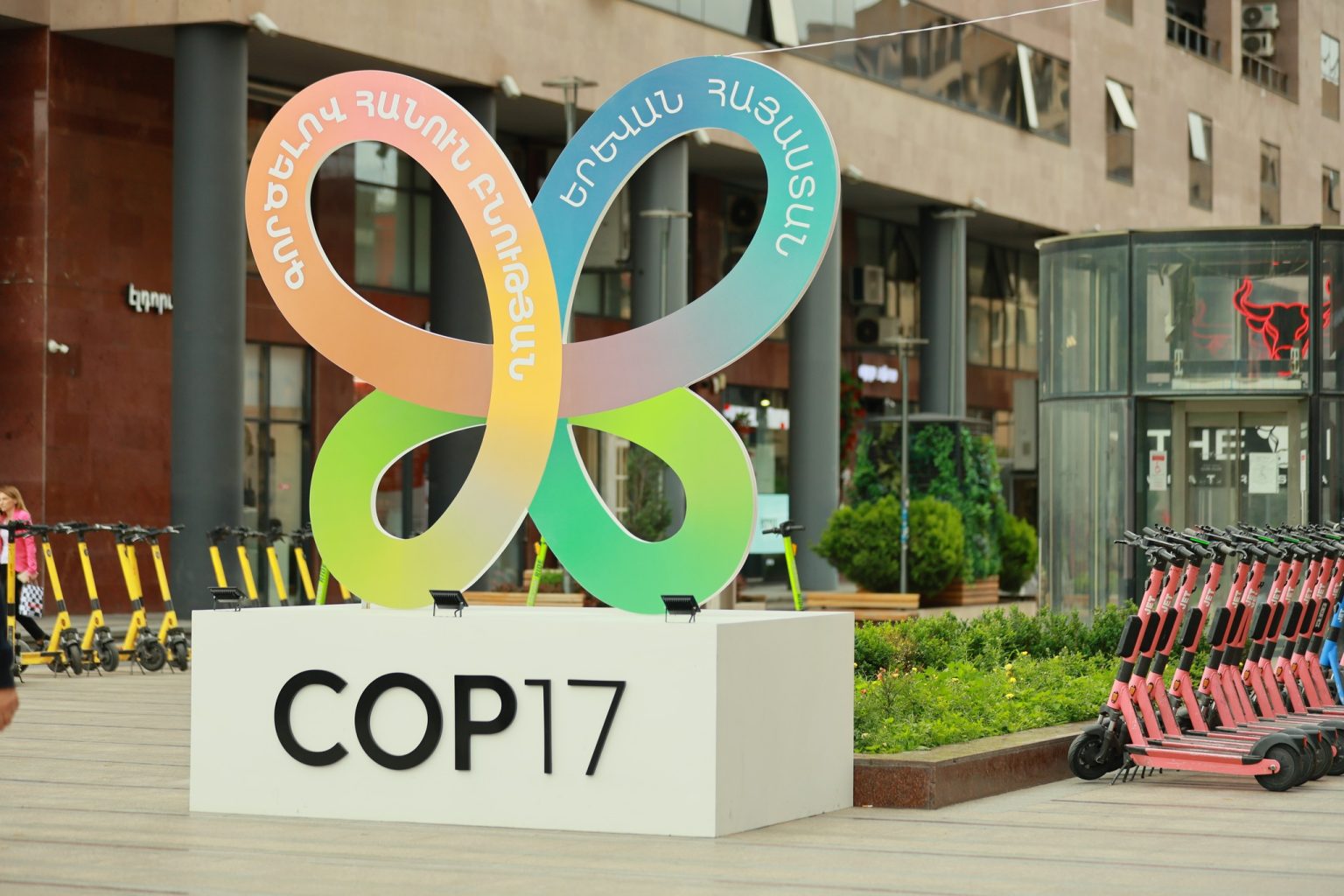
Joined by Armenian experts in biodiversity and climate policy, the press conference outlined why the first CBD COP hosted in the South Caucasus is an important milestone for the region of Eastern Europe, Caucasus and Central Asia (EECCA). Speakers highlighted the links between nature loss and human health and the need for stronger synergies between the biodiversity, climate and desertification conventions. The discussion made clear that there is a crucial need for EECCA civil society to have a seat at the table in shaping and monitoring delivery of the Kunming-Montreal Global Biodiversity Framework.
“It’s an accountability moment for the world. A promise to live in harmony with nature by 2050 and, more immediately, to halt and reverse biodiversity loss by 2030. Now is the time to turn these global commitments into concrete actions and measurable results.” said Alla Aleksanyan, environmental scientist, policy and governance expert, Head of Department of plant diversity and Ecosystem Studies ISEC NAS Armenia.
Key takeaways
- A moment of accountability: COP17 will be the first global stocktake of progress on the Kunming-Montreal Framework’s 23 targets, with the aim of closing the gaps in policy and implementation.
- Nature is vital infrastructure: In Armenia, the Caucasus and the wider EECCA region, healthy ecosystems underpin water security, food systems, climate resilience and public health.
- Synergy needs local beneficiaries: Coordinated action across the Rio Conventions (on climate, biodiversity and desertification) has stalled for three decades, and finance that reaches local communities is the key to unblocking it.
What is the focus of COP17?
This biodiversity summit in Yerevan will bring together all 196 Parties to the Convention on Biological Diversity (CBD), alongside Indigenous peoples and local communities, scientists, civil society, youth, business and international organisations. Its central task is the first global review of collective progress on the Kunming-Montreal Global Biodiversity Framework, adopted at COP15, which sets 23 global targets to be met by 2030. The review is not intended to rank countries, but to assess what has worked, where implementation is missing, and which finance, capacity and policy reforms are still needed. National delegations of Parties to the Convention will agree a credible path for the final four years to 2030. This is also the first biodiversity COP held in the EECCA region.
“This is the first time a biodiversity COP is happening in our region. It is a great honour and also a great responsibility. For Armenia, the Caucasus and the wider EECCA region, biodiversity policy cannot be treated as a narrow conservation issue. It is directly connected to the security and well-being of our nations and communities.” highlighted Alla Aleksanyan.
Biodiversity and health must be protected together
The COVID-19 pandemic made the link between biodiversity and human health impossible to ignore. It made it clear that environmental degradation and poor standards for ecosystem management can create health threats. COP16 in Cali adopted the Global Action Plan on Biodiversity and Health, a voluntary framework that encourages coordination between human, animal, plant and environmental health authorities under the One Health approach.
“Healthy ecosystems support clean air, safe water, food diversity, nutrition, mental well-being and resilience against climate-related hazards. At the same time, ecosystem degradation, poorly managed land-use change, wildlife trade and pollution can contribute to health threats. At COP17, attention will turn to how countries can translate the voluntary Global Action Plan on Biodiversity and Health into concrete action, strengthen national implementation, and track progress” shared Alla Aleksanyan.
Convention synergies: from principle to practice
The Convention on Biological Diversity and the UN Framework Convention on Climate Change were adopted together in 1992, with the Convention to Combat Desertification following in 1994. Together they are known as the three Rio Conventions. The case for synergy between them is widely accepted, yet in practice it has remained limited for more than 30 years.
“Each convention has its own logic. The climate convention may see hydropower as useful for emissions, but we know it can have a very negative impact on biodiversity and land use, especially in mountainous countries. At the same time, technologies that protect the climate can also serve land users, but only if the real beneficiaries are involved. We need a common doctrine of joint action under the three Rio Conventions,” said Aram Gabrielyan, climate policy expert and representative of Khazer Ecological and Cultural NGO.
Gabrielyan argued that synergy will only work if the real beneficiaries, the people who live in and depend on ecosystems, are engaged. He pointed to the example of Armenia collecting around 100 million USD a year in fees for pollution, waste and the use of natural resources. Although the law says this money should go to nature conservation, it flows into the state budget. A proposal in 2015 to redirect it to a dedicated fund was never implemented.
What to expect in the negotiations
For the EECCA region, the discussion identified four key opportunities for these biodiversity negotiations: securing better implementation support, advancing transboundary conservation, showcasing local projects whose impact often remains small and unseen, and mainstreaming biodiversity into economic development.
Meanwhile, as the host country of the summit, Armenia is using this moment to strengthen public engagement in action for nature protection. A Citizen Action Plan based on Armenia’s National Biodiversity Strategy and Action Plan (NBSAP) will be launched in both the Blue and Green Zones. It translates national targets into simple, motivating actions that every citizen can take.
“The public is not only the source of power but also its bearer. Responsibility comes automatically when people are given the right,” pointed out Aram Gabrielyan. “When the Rio Conventions were negotiated in 1992, countries like Armenia, Azerbaijan, Georgia and those of Central Asia were newcomers and did not take part in shaping the texts. Hosting COP17 here is a chance to change that.”
Note to editors
- Green Zone: Alongside the accredited COP17 Blue Zone, a public Green Zone requires no accreditation, and some events will be livestreamed. A third Urban Biodiversity Zone, created by the municipality, sits between them and will host pavilions and cultural events.
- Finding events: The official side-event list is on the CBD website, but many pavilion events are published separately, so journalists should check with organisers.
- Interviews: Speakers representing civil society organisations part of CAN EECCA are available for comment in English, Armenian and Russian.
For more information please go to the COP17 website or contact
Viktoriya Ball
CAN EECCA Secretariat
viktoriya@caneecca.org