 During the COP30 negotiations, countries raised an issue that had previously remained on the margins of attention: the fight against disinformation.
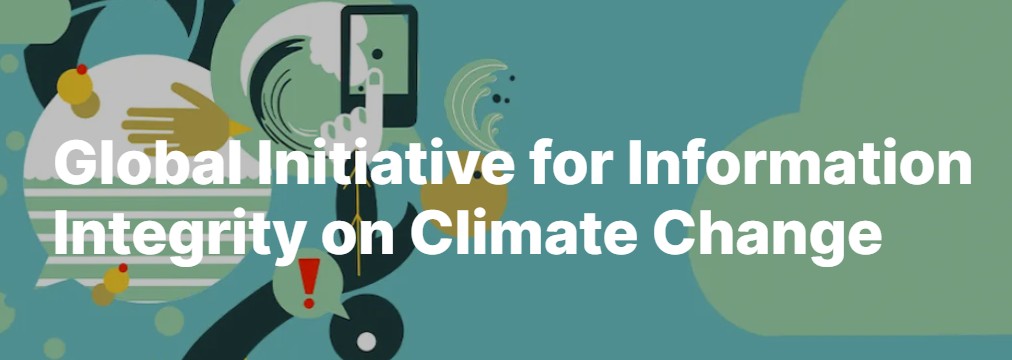
Disinformation significantly slows climate reforms, undermines trust in science, and creates political barriers even to the most necessary decisions. That is why 21 countries have already endorsed the new Declaration on Information Integrity on Climate Change — a document that opens a new chapter in global climate policy. However, not a single country from the EECCA region has signed the declaration so far.
Countries have formally acknowledged that it is impossible to address the climate crisis when the public space is dominated by false narratives, covert advertising by the fossil fuel industry, and attacks on those who speak the truth.
This emphasis was voiced on the very first day of COP30. Brazilian President Luiz Inácio Lula da Silva stated that the fight for truth has become as important today as reducing emissions. According to him, this conference should become “another defeat for climate deniers.”
“COP30 in Belém will be the COP of truth,” Lula said.
What does this declaration mean for the EECCA region?
For the countries of Eastern Europe, the Caucasus, and Central Asia, the declaration has particular relevance. The region simultaneously faces growing climate risks, limited access to environmental data, and fragile independent media.
Weak independent media and a politically constrained environment
The region is experiencing wars, conflicts, and rising authoritarianism. Independent media operate under difficult conditions: some newsrooms work in exile — for example, from Azerbaijan, Belarus, and Kyrgyzstan — many rely on donor support, and investigative or fact-checking projects remain rare.
The declaration sets an important precedent. It opens access to new international resources and strengthens the legitimacy of independent outlets covering climate and environmental issues. If funding reaches the region, it could enable more high-quality investigations, verification of controversial climate claims, and debunking of myths — from “clean coal” to outright denial of global warming.
Such narratives are clearly visible in the region’s largest countries. In Russia’s public discourse, claims about the potential “benefits” of global warming periodically appear, including possible growth in agricultural production or expanded navigation in the Arctic. These arguments are discussed even in economic analytical materials and expert reports.
For example, in one report, analysts from the Institute of Economic Forecasting of the Russian Academy of Sciences estimated a potential positive effect of warming on Russia’s GDP at more than one trillion rubles, citing growth in the agricultural sector and expansion of the Northern Sea Route. At the same time, they emphasized that such estimates are valid only “under certain conditions” and do not account for the full range of climate risks.
Meanwhile, the real consequences of climate change — accelerated permafrost thaw, threats to infrastructure, and the growing frequency of extreme weather events — have a significant negative impact that remains overshadowed by these optimistic narratives and requires in-depth analysis and independent verification.
Guilherme Canela, Director for Digital Inclusion, Policies, and Transformation at UNESCO, emphasized that the new initiative is designed to unlock additional funding for journalistic investigations and research projects, especially in countries of the Global South.
“We still know very little about what’s behind this. For example, who funds these posts, and why do they spread faster than other types of content? How does that happen? If we don’t understand these mechanisms, it’s very difficult to design effective strategies to combat this phenomenon. The core of this global initiative is precisely to finance, especially in the Global South, investigative journalism and research projects to uncover what’s really happening,” he said.
Data opacity and limited access to information
In many countries of the region, transparency of environmental information remains a challenge. Emissions statistics are published irregularly, data on air quality or water resources are missing or inaccessible, and scientists and NGOs face restrictions on field data collection.
If EECCA countries were to join the declaration, it would increase international pressure on governments to ensure data availability and to protect those who collect and disseminate information.
One such example is the Gavigudet initiative in Georgia. In the city of Rustavi, air pollution had long been poorly reflected in official statistics, and regular, accessible air quality data were limited.
The Gavigudet civic initiative, together with local activists and experts, began collecting and analyzing independent pollution data. This made it possible to clearly demonstrate the scale of the problem and to initiate dialogue with local authorities.
High vulnerability of the region to climate change
In practice, EECCA countries are among the most vulnerable to the climate crisis — from glacier melt and water conflicts to extreme heat and deteriorating air quality. Nevertheless, the media landscape is often shaped by oil, gas, and coal interests, leading to distorted coverage of climate issues and pressure on critical reporting.
According to Adil Jalilov, Director of the MediaNet International Journalism Center, the adoption of the declaration comes at a moment of deep crisis of trust — both in the climate agenda and in international institutions more broadly. Against the backdrop of wars, rising authoritarianism, and growing climate skepticism, countering disinformation becomes not only an environmental but also a political challenge.
“In my view, at its core this is an important document that draws a clear line and invites countries to decide which side they are on — the light or the dark. This is especially important after Trump’s statements at the UN, when he publicly called the climate agenda fake and conspiratorial and became the main climate skeptic. That’s one side of the issue.
On the other hand, joining the declaration is unlikely to impose any concrete obligations on countries, beyond a kind of quiet protest against Trump’s aggressive disinformation. And if you look closely, so far only three non-European countries have signed the document — Chile, Brazil, and Uruguay.
There is also another critical problem: Putin’s war in Ukraine and Trump’s actions devalue international law, the role of international organizations, and, accordingly, documents like this declaration,” Jalilov says.
The adopted declaration reshapes the approach to climate policy and sets new benchmarks for all countries. From now on:
- Access to accurate, science-based climate information is recognized as a fundamental right for everyone.
- Independent media and fact-checking are officially recognized as elements of climate infrastructure, without which effective climate policy is impossible.
- Journalists, scientists, activists, and other public voices must be protected from pressure and attacks, and their work must be respected and recognized.
- Disinformation, greenwashing, and climate denial are identified as direct threats to climate policy, not merely as “secondary communication issues”.
- A Global Fund for Information Integrity will be established under UNESCO to support research, media, fact-checking, and anti-disinformation initiatives, with particular attention to developing regions.
In effect, the document establishes a new international norm: the right to reliable climate information becomes part of the right to a safe and sustainable future.
Despite the significance of the initiative, the declaration is far from a universal solution. It is non-binding and does not require countries to change their legislation. Its real effectiveness will depend on political will, while available funding remains limited. Moreover, in several countries, reducing pressure on the media will require deep and long-term reforms.
It is also important that countries of Eastern Europe, the Caucasus, and Central Asia have not signed the declaration, which limits its direct impact on the region — although it does create an important international reference point that media and civil society can rely on.
This article was developed within the framework of the Communicating Climate in Central Asia project, supported by the German Federal Ministry for Economic Cooperation and Development.